

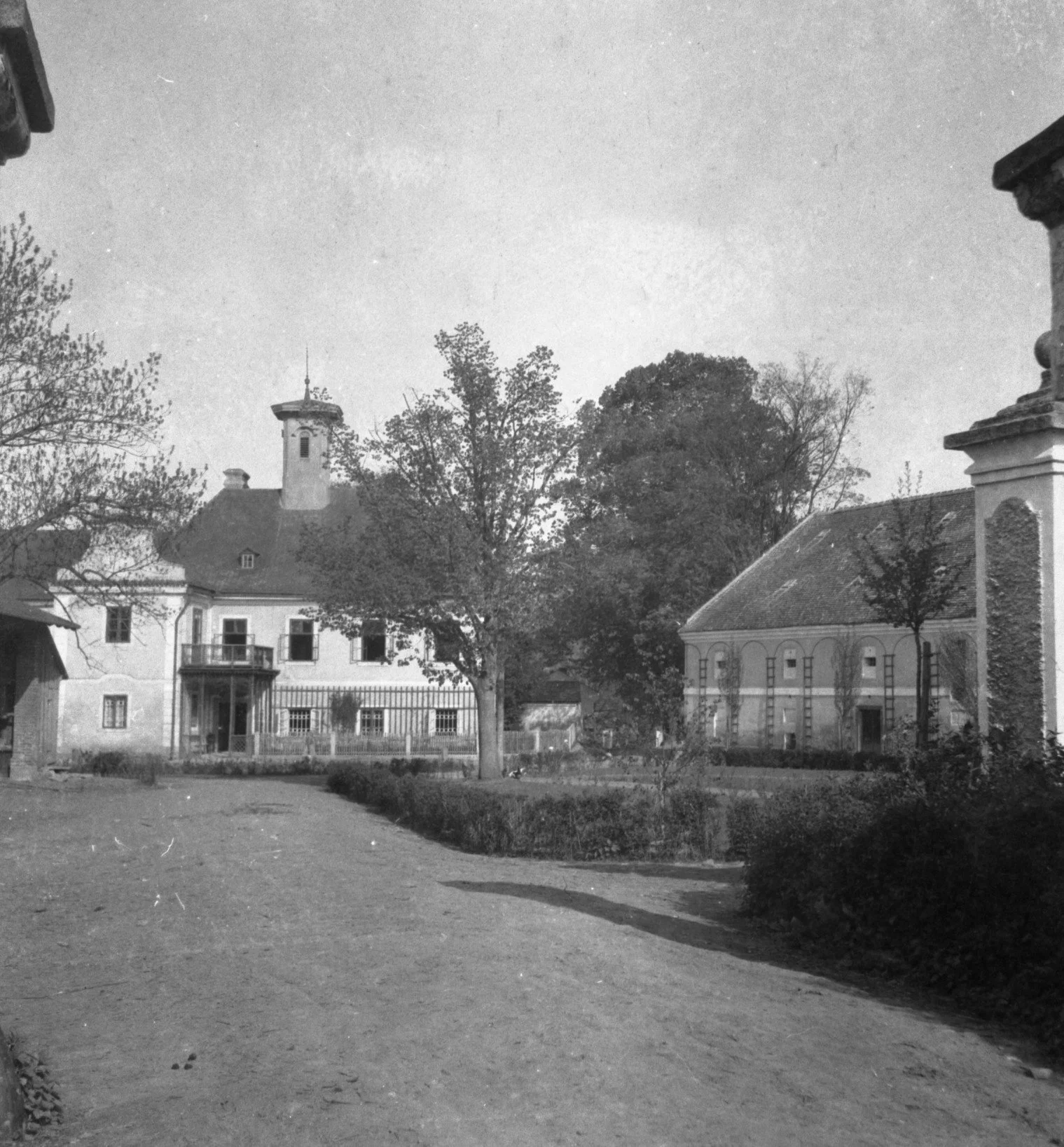
Historie
První písemné prameny o této památce jsou z roku 1382. Ty zmiňují gotickou tvrz, jejichž vlastníky byli Ahník a Ctirad z Nemilkova. Tvrz sloužila k obraně, hospodářství i ubytování. Další významnou osobností sídlící na Nemilkově byl český šlechtic Jan Bohuchval z Hrádku, který na konci 16. století přestavěl část tvrze na renesanční zámeček s poplužním dvorem. Po bitvě na Bílé hoře (1620) panství levně získal nechvalně známý generál Don Martin de Hoef-Huerta (pán z Velhartic). A od té doby se tu velmi rychle střídali majitelé. Až v polovině 18. století koupil dvůr rod Khuenů z Bellassy, a ti udělali barokní přestavby.

Kresba zámku z poloviny 18. století.
V roce 1798 koupil Nemilkov Martin Bartoloměj Schreiner. Rodina Schreinerů byla vzdělaná a pokroková, i když pocházela ze selských poměrů. Úspěšně tu hospodařily čtyři generace tohoto rodu, a to nejen v zemědělství. Součástí panství byl totiž i pivovar, lihovar, hamr s pilou, vodní elektrárna. Budovali silnice, podíleli se i na stavbě železnice. Po celé Evropě proslavili Nemilkov speciálními odrůdami jehličnanů, které zde vyšlechtili. K zámku přistavěli klasicistní křídlo.
Nejznámějším příslušníkem rodu byl bezesporu Gustav Schreiner – brilantní právník, odborník na zemědělství ,nepřehlédnutelný poslanec říšského sněmu a aktivní člen mnoha „proněmeckých“ spolků. Hájil německou menšinu za Rakouska-Uherska i za Československa.
Opakem byl jeho syn Georg, který mezi národy nedělal rozdíl. Miloval historii a umění. Bohatou historii na zámku odkrýval a restauroval. A co víc, podle svého vkusu zámek historicky přikrášloval. Všechny své plány, asi nezrealizoval, protože hned po válce, v roce 1945, byl s celou rodinou zařazen do odsunu.
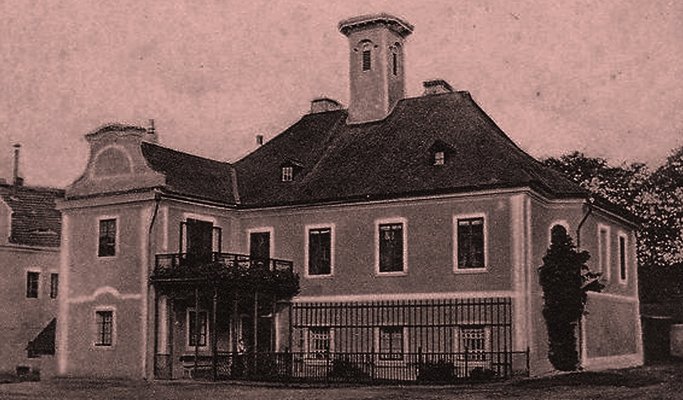
Zámek na začátku 20. století.
V letech komunistické totality celý areál využívalo místní JZD (jednotné zemědělské družstvo) k hospodaření. V budově zámku byly částečně byty a chvíli také kanceláře MNV (místní národní výbor). Bez údržby však začaly budovy rychle chátrat. Hospodářství se přestěhovalo jinam a v areálu se postupně shromažďoval různý materiál i odpadky. Rodina Schreinerů jako poslední soukromí majitelé byli německé národnosti, proto po roce 1989 neměli nárok na restituci. V roce 2016, když areál koupili současní majitelé, byl opuštěný a zpustlý. Jejich cílem je navrátit mu život. Otevřít prostory pro veřejnost a být místem pro kulturu, vzdělání, odpočinek i sportovní vyžití.
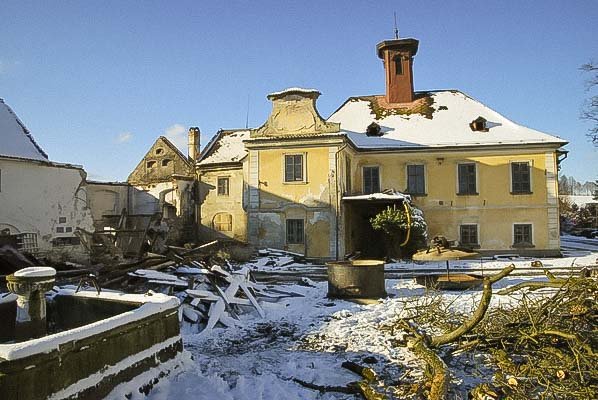
Zámek na začátku 21. století.